Category Archives: Home

Links to the stories that have been accepted for publication.

‎September ‎29, ‎2021 – Meditation on Joseph Campbell’s Essays

I’ve been reading Joseph Campbell’s writing on myth and on ritual. He has a specific view of the role of religion, myth, and ritual in the lives and beliefs of contemporary civilization, and points to science as the source of a contemporary crisis, in that science has dispelled literalist interpretations of biblical legend (and other religious narrative):

“And in this there is serious danger. For not only has it always been the way of multitudes to interpret their own symbols literally, but such literally read symbolic forms have always been – and still are, in fact – the supports of their civilizations, the supports of their moral orders, their cohesion, vitality, and creative powers. With the loss of them there follows uncertainty, and with uncertainty, disequilibrium, since life, as both Nietzsche and Ibsen knew, requires life-supporting illusions; and where these have been dispelled, there is nothing secure to hold on to, no moral law, nothing firm.”

I can see that crisis as it plays out in the US (and perhaps all Judeo-Christian traditions). Literalism tends to coincide with fundamentalism, because to continue to understand the Bible, and biblical texts, in a literalist sense, one must diverge from a fact-based, “scientific” understanding of humanity and of history all the more rigorously. This not only polarizes humanity, but it further activates the isolationist notions of supremacy that are born of literalist understandings of religious texts: “Now the peoples of all the great civilizations everywhere have been prone to interpret their own symbolic figures literally, and so to regard themselves as favored in a special way, in direct contact with the absolute.”

Furthermore, Campbell sees a crisis in those who lack faith. He possesses a more traditional view of society and culture, and saw the counterculture springing up around him during the sixties as an example of the loss of foundational belief systems. He was also critical of the new age (my term) tendency to adopt piecemeal bits of eastern religions and philosophies divorced from their cultural context:

“With our old mythologically founded taboos unsettled by our own modern sciences, there is everywhere in the civilized world a rapidly rising incidence of vice and crime, mental disorders, suicides and dope addictions, shattered homes, impudent children, violence, murder, and despair.”

Though I’m not certain if these ailments of mankind didn’t exist with equally alarming regularity before the contemporary moment, and though I don’t qualify each of them as a societal loss, I do generally agree with Campbell that today’s secular world is marked by a sense of despair and helplessness. I also agree that this helplessness is in part rooted in the loss of faith-based belief systems that have traditionally provided a recipe and justification for decency and kindness (at least within one’s own community). They have also provided a meaning or a justification for such behaviors, in that human decency and just participation within a given social order may be rewarded in a religious sense. This reward or promise, in its basest form, is a pleasurable existence in some heavenly afterlife. In more heady interpretations of religion, redemption comes in the form of transcendence.

So that is the current predicament: between “the cries of preachers for repentance, conversion, and return to the old religion,” and their challenges to “the modern educator with respect to his own faith and ultimate loyalty,” and, on the other hand, the perceived nihilism of the secular world, themselves suffering from the loss of guiding principles.

And this is where, at least in Campbell’s earlier lectures, he loses focus on the potentiality for a new guiding myth. He limply suggests that it may be found in psychology, with its exploration of the unknown that resides within each of us. If psychology were to investigate the history of myth and ritual, identify the causes and sources of human faith in these systems, and relate that to unconscious needs or desires, then perhaps we could reconstitute a mythos of the individual, a mythos that accommodates personal identity (essential, as it turns out, for better or for worse, in Western traditions).

The primary mistake that I see in this reasoning, and this is not to discount Campbell, because his lectures are masterpieces, and I can see the foundation for much of the contemporary understanding of culture and religion embedded in his philosophies. But I don’t believe that he was able enough to identify the mythological systems already functioning in western society, beliefs and rituals that, while they may not have liturgical foundation, are taken as guiding principles, and are also products of our contemporary moment. I also think that this is a result of a common assumption that we make about science, which is that it exists outside of ideology or ideological determinations – that it is objective.

On the other hand, Campbell sees myths as inherently subjective, reflective of the contexts in which they are believed and practiced. He theorized that the foundational function of myth was to explain the unknown, and, in particular, to make sense of death. Furthermore, there was necessity for individuals to participate within a society, which subsequently required shared rules and beliefs. And finally, at a broader level, the natural context, the environment itself, provided the symbolic material for myth. An example that he uses often is ritual sacrifice within primitive farming communities. A specifically agricultural understanding off the cyclically of birth, life, death, and rebirth led these societies to enact ritual sacrifice in something like emulation of these natural processes.

So the formation of myth and ritual are narrative traditions used to explain natural phenomena and to understand humankind’s role within the natural universe. Yet, the arrival of science appears, at first glance, to be in conflict with these traditions. Campbell believes that: “as a result of the continuing open-hearted and open-minded quest of a few brave men for the bounds of boundless truth, there has been a self-consistent continuity of productive growth.” So, early on at least, Campbell believes that scientific investigation has led to a new and essential understanding of the world, but one that diverged from mythological narrative historically believed to be true.

The old texts comfort us with horizons. They tell us that a loving, kind, and just father is out there, looking down upon us, ready to receive us, and ever with our own dear lives on his mind. According to our sciences, on the other hand nobody knows what is out there, or if there is any “out there” at all. All that can be said is that there appears to be a prodigious display of phenomena, which our senses and their instruments translate to our minds according to the nature of our minds.

It seems that myths and religious narratives, especially in a literalist tradition, are believed to be true by the faithful – to the exclusion of all contradictory thought. And that, with the advent of a revolutionized understanding of the world, with advanced instruments of measurement and observation, the ground or base of understanding is more “sophisticated” or at least different from, say, primitive agricultural societies. Thus, we have a newer context in which our own mythologies are generated.

This being the case, and according to Campbell’s logic, if one believes that there might be a contemporary belief system or matrix of narratives that constitute our current mythology, it would have to be born of this new context which has proved older understandings of the world obsolete. All faith-based belief systems, and particularly those which practice literalist interpretations of liturgy, believe in the truth of that which they are faithful to. And in certain ways, absolute belief makes it impossible for the believer to interrogate their own system. We become blind to the faults of those things we accept as fact. Campbell writes: “For the really great and essential fact about the scientific revelation – the most wonderful and most challenging fact – is that science does not and cannot pretend to be “true” in any absolute sense.” Contemporary secularism has created a sort of dichotomy between science and religion, but, despite Campbell’s more nuanced understanding of science, we have come to take “science” as synonymous with fact.

Before proposing that psychology, and psychological understandings of myth, might be a means to salvaging our dying mythos, Campbell writes:

“In moral disequilibrium, we must now ask whether it is not possible to arrive scientifically at such an understanding of the life-supporting nature of myths that, in criticizing their archaic features, we do not misrepresent and disqualify their necessity – throwing out, so to say, the baby (whole generations of babies) with the bath water.”

And what I would argue is that we are still living in a time of ritual and mythology. Those living within the myth are unable to see it as such. It is naturalized in society as “the way” rather than an object of study, and for that reason, we cannot exactly turn to the old myths for guidance. They are already perceived as such, despite that many elements of those myths and rituals are still evident in current practices (dates of the resurrection coinciding with harvests and such).

That said, perhaps we are still living under the sway of a new narrative, something that provides meaning and guidance, is a reflection of our contemporary society and our physical surroundings, and is taken to explain the world in such a way that accounts for available and observable phenomenon.

Campbell describes something like this reflection of contemporary society as explained through mythology, though he focuses in this case on the pervasive effect of Judeo-Christian religion in the Occident. Campbell, in critiquing the new age fad of sampling, piecemeal, bits of eastern religion in order to establish some form of meaning, says that a western emphasis on the individual, a consequence of religious traditions, precludes us from adopting eastern philosophies. He argues that an emphasis on individuality has prompted humans to do great things, but he also sees the limitations of the ideal, and through recourse to eastern religions illustrates that our certainty in the value of individuality is simply a matter of cultural tradition.

Leave a comment

Filed under Blog Posts, Home, Literature, Memoir

Pisgah – “The Memoirist’s Christmas”

Pisgah Review is defunct, but read the story here.

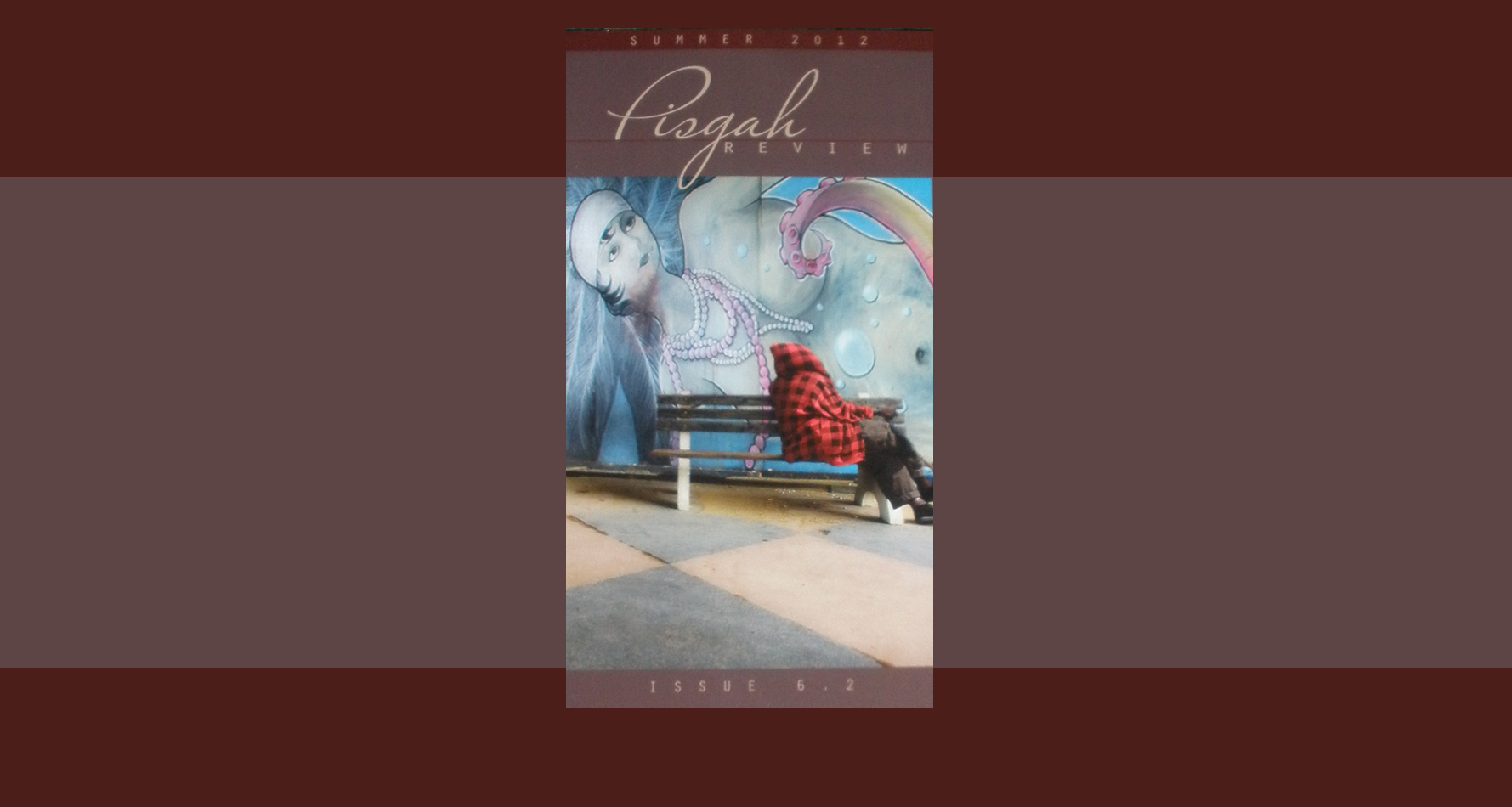
“The Memoirist’s Christmas,” was published in the Summer 2012 issue of Pisgah Review. I think that sometimes, when someone’s in a particular mood, a mood that leads that person to feel as if the world cannot accommodate them, then she or he might also be led to conclude that the world is unaccommodating in general.  This piece was certainly written from a place of misanthropy and the fear through which that distrust is derived. 

“Pisgah” was wonderful enough to publish “The Memoirist’s Christmas,” but has since ceased publication. They operated out of the creative writing department at Brevard College, in Brevard, North Carolina. 

Leave a comment

Filed under Home, Literature, Memoir, Short Story

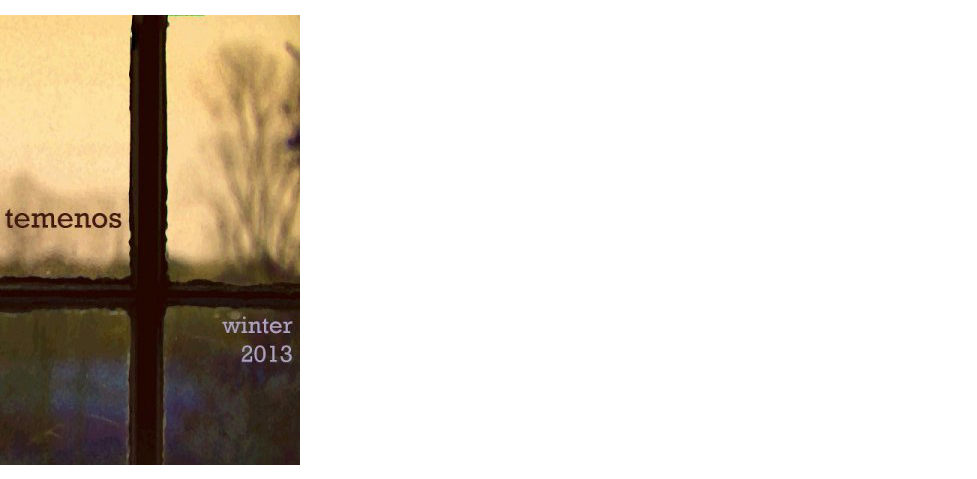
Temenos – “My Portrait in the Memorial”

Though the story is no longer available through the publisher site, you can read it here

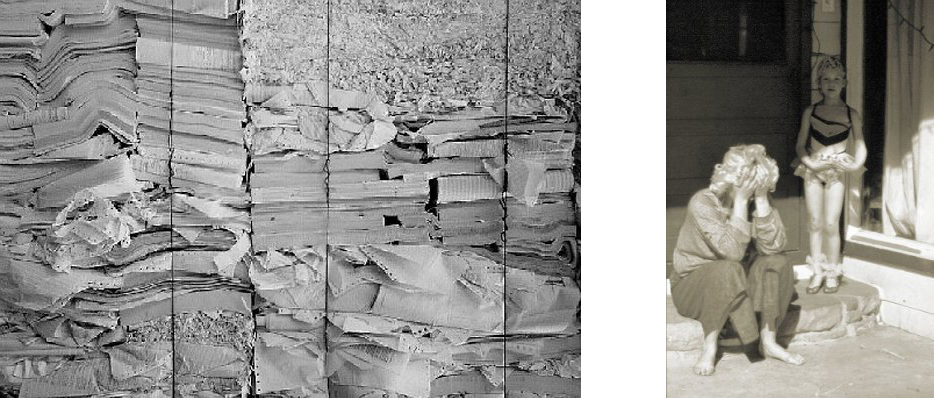
The short story titled “My Portrait In the Memorial”, published in the Winter 2013 issue of Temenos, relates an incident that traumatized my community while I was in junior high school.  I had a lot of issues writing this piece, and was even more conflicted when I began submitting it for publication.  But I believe that I was as honest as I could be (as if honesty is an excuse for publication), and I believe that it accurately reflects the ambiguities and ambivalences of unimaginable tragedy, so I hope that I acted reasonably here. 

Temenos is the Central Michigan University graduate literary journal, founded in 2000. The magazine has no philosophical or esthetic allegiances. They publish poetry, fiction, non-fiction, and art by new and established writers and artists.

The Greek word “temenos” refers both to the ancient Greek concept of sacred space and the Jungian ‘safe spot’ where one may bring the unconscious into the light of consciousness. Temenos’ mission is to bring to light works that are engaging, memorable, and fearless.

They accept submissions year round. Please see their submission guidelines for more information.

who we are

We seek outsider, clout-less, non-standard work that gleams.  We want to celebrate our contributors; both the artist and their art. For us, that means that upon publication, your submissions will appear in a journal that has been conceived by a team of caring and meticulous editors; it will look good. Ultimately, our goal is to publish catalysts of transition for the observer, to lull, or to instigate. We want work that encourages the appreciation of craft and the desire to create. 

The Greek word “temenos” refers both to the ancient Greek concept of sacred space and the Jungian ‘safe spot’ where one may bring the unconscious into the light of consciousness. Our mission is to bring to light works that are engaging, memorable, and fearless.

As of 2021, Temenos publishes one online edition in the spring, and one in the fall. Please see submit for our current Call for Submissions and submission guidelines. Past and current issues of Temenos can be accessed for free on this website, on both the home page and in the Archives. We can be contacted at temenoslit@gmail.com

.

who we’ve been

Temenos is a literary journal that originated from Central Michigan University (CMU), founded in 2000 and run entirely by graduate student volunteers. The magazine has no philosophical or aesthetic allegiances. We publish poetry, fiction, creative non-fiction, and art by new and established writers and artists. Since 2020, Temenos operates entirely independently.

where we’re going

After a long period of tumult, the Temenos staff is happy to announce that we are back! We are so happy to be doing this and we’re excited to read and view your work.

Our submission fee is $5. Submission inquiries can be directed to temenoslit@gmail.com. If funds are lacking, we are willing to accommodate. Incarcerated artists and writers may submit for free, by email, as long as it is noted in the subject of the email.

Leave a comment

Filed under Home, Literature, Memoir, Short Story

Constellations – “Turn into the Skid”

Constellations - Banner 2

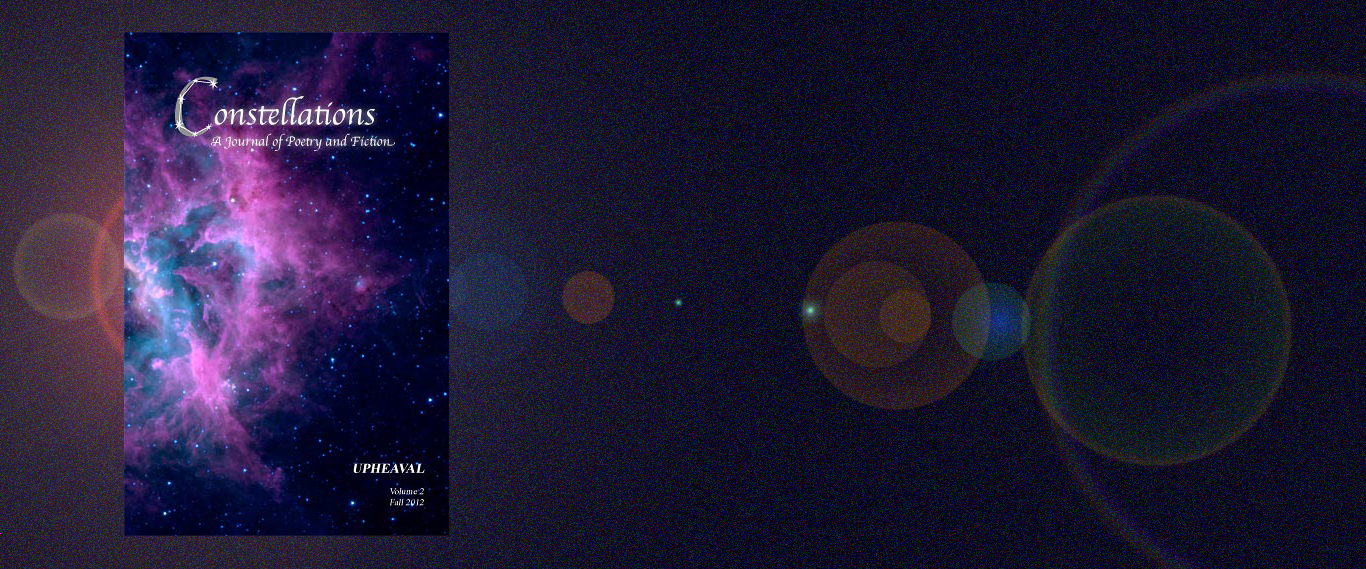
“Turn into the Skid” is the story of a young manfailing to heed that sage piece of wisdom.  When you’re veering out of control it’s counter-intuitive to turn into the skid, but que sera, right?  This story also happens to be about the fleetingness of objects.

While the piece is not available online, you can order Volume 2 of Constellations, titled Upheaval, from Createspace for the totally reasonable price of $10.  Just click this link to be redirected to the order page.

Constellations - Cover - artsy copy

About Constellations’ editor:

Nina Rubinstein Alonso, editor of Constellations, has published in Ploughshares, The New Yorker, Sumac, Avatar, Women-Poems, U. Mass. Review, and New Boston Review, among other places, and her first book This Body was printed by Godine Press.

She taught English literature at Brandeis University and U. Mass., Boston, while continuing training in ballet and exploring modern dance.  (Crazy enough, and in my opinion her greatest achievement, is that she might – totally incidentally – be related to me.  The Petaluma Jewish community was somewhat incestual not too many generations back.)

Saturated with academia, she taught at Boston Ballet for eleven years, and performed in their Nutcracker, until sidelined by injuries. She makes her living teaching at Fresh Pond Ballet in Cambridge, MA. She says, “Now is the time for fresh voices in poetry and fiction. I’m looking for a new constellation.”

Leave a comment

Filed under Home, Literature, Memoir, Short Story

Santa Clara Review – “My House of Cards”

Read the story here.

“My House of Cards.”  It is about terrible roommates – including the narrator – and it was published in the Spring 2012 issue of  The Santa Clara Review . an accomplishment that I’m proud of.  Having spent most of my life in Northern California, and having lived for a couple of years in San Jose, Santa Clara Review felt like a home coming.  The publication is professional looking, their layout is great, the featured artwork is beautiful, and I’m published beside a number of talented authors and poets.

For the online version of the magazine, click here.

For the free eReader download, click here.

For the free iPad edition, click here.

You can also order yourself a physical copy of this magazine – just get in touch with the editors.  Back issues are $7.50.  Ask for Spring 2012.

Mail:
Santa Clara Review
500 El Camino Real, Box 3212
Santa Clara, CA 95053

Phone:
(408) 554 – 4484

Email:
santaclarareview@gmail.com

Santa Clara Review:

Santa Clara Review is a student-edited literary magazine which publishes poetry, fiction, non-fiction, visual art, and music. The magazine is published biannually in February and May, drawing on submissions from Santa Clara University students, faculty, and staff, as well as from writers around the nation and globe. The Review is entirely student run by undergraduate students who are actively enrolled. The Review promotes the literary arts in several spheres: the student and alumni writing community within Santa Clara University, the academic literary community, and the national community of writers outside of SCU.

The Review is committed to the development of student literary talent, both in editorial and creative writing skills. The Review provides Santa Clara students an opportunity to gain knowledge in the practice of contemporary writing and criticism, and creates a forum for faculty, students, and alumni to express their creative energy.

History and Vision:

Founded in 1869, Santa Clara Review–formerly known as The Owl and The Redwood–is one of the oldest literary publications in the Western U.S. Throughout its duration the publication has represented Santa Clara University’s commitment to the humanities, a tenant of Jesuit education. Because the Review shares in Santa Clara University’s commitment to the humanities, the Review will accept only the highest quality material for publication, material which echoes Santa Clara University’s dedication to the pursuit of truth, honesty, and social responsibility within the literary arts.

Leave a comment

Filed under Home, Literature, Short Story

Retort Magazine – “The Drive Home”

Retort is defunct, but read the short story here.

The Drive Home” is about a man somewhat confused in his spirituality.  It’s a weird little piece, the work of a disturbed man, but I love it, and I knew the folks at Retort would love it too, so I sent it their way.  To my delight, they accepted it. Unfortunately, Retort has since folded.

Retort Magazine is dedicated to the publication and presentation of new innovative, experimental cutting edge art + text in all disciplines. Retort Magazine publishes both fiction and non fiction. Retort has published some of the worlds best known artists and writers but is also a platform for new and emerging writers and artists. We favor the cutting edge over the blunt of the handle, the avant-garde over backward walking, the delinquent imagination over the hammered economic mind. We publish whenever something interesting arrives in the inbox.

HISTORY

Founded in the laundry of an old queenslander behind a gas station in Brisbane in 2001 by Australian poet/writer Brentley Frazer RETORT was originally conceived as a spinoff to a live poetry/music/art/performance event called The Vision Area. The Vision Area was a monthly ‘culture jam’ started by Brentley and poet Adam Pettet and hosted by Ric’s Bar in Fortitude Valley, Brisbane, Australia. The Vision Area ran from 1998 – 2000 and only ended when the co-ordinators felt they had drained the talent pool.

In the beginning Retort was published as a bi-monthly online magazine. In 2003 after receiving a development grant Retort moved to an experimental ‘live’ format with new content being published whenever something cool arrived in the submissions inbox. After the experiment was deemed impossible by the exhausted editor (without the budget of at the very least a mid-sized newspaper in a large city), Retort resumed publishing on a semi-regular basis and has continued, throughout a whole decade, reaching millions of individual readers.

Retort is now based wherever the Editor is – which is usually somewhere on planet Earth.

Retort Magazine is archived on site and since 2003 also by The National Library of Australia as part of the Pandora Project which aims to permanently preserve electronic publications based on their national and cultural significance.

Retort - store-closed-485x728

Sadly Retort Magazine has closed down.  In the words of the magazine’s Editor, Brentley Frazer:

12.5 years. Enjoyed a huge readership in the 00′s. Broke some ground (and a bunch of rules). Had a good time mostly. Would have loved to grow it into something huge, like an alternative to the old school greats that have become a parody of their former glorious selves. Retort stayed truly independent, never even applied for a government grant. I refuse to read government endorsed literature or view government endorsed art. Rest assured, the only propaganda you were exposed to while reading Retort was my personal agenda to champion the creative spirit of my fellow humans.

Have a nice life.

best

Brentley

Leave a comment

Filed under Home, Literature, Memoir, Short Story

Grey Sparrow – “Packing the Wound”

Grey Sparrow is defunct, but you can read the story here.

“Packing the Wound” was published in Grey Sparrow Journal and is about the trials and tribulations of post surgery home-care. Frankly, it’s disgusting, but more than being about the horrible things that a human body does to a person, this is a story of the love it takes for someone to care for such a human body. Anyways, despite the wretchedness of the content, this was an emotional story for me, and I think that it found a great home in Grey Sparrow. Unfortunately, Grey Sparrow has since ceased publication.

(Incidentally, David Sedaris wrote a similar piece, “Old Faithful.” I only discovered this after the fact, while reading When You Are Engulfed In Flames.)  .


Leave a comment

Filed under Home, Literature, Memoir, Short Story

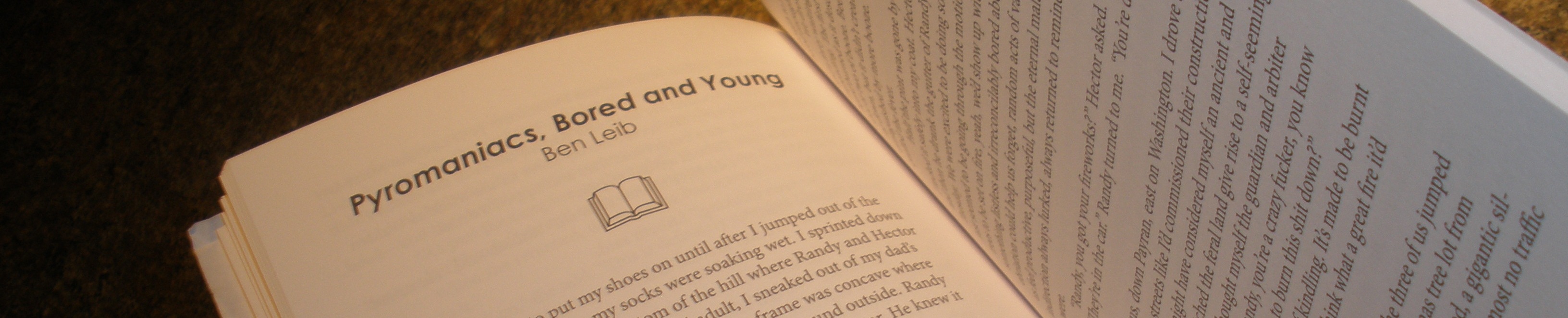
Inwood Indiana – “Pyromaniacs, Bored and Young”

Inwood Indiana is defunct, read the story here.

I have another story out titled “Pyromaniacs, Bored and Young.”  Though the publication is defunct, you can still order a copy and check out page 335 of Inwood Indiana’s Summer 2012 issue, Harvest Time, then you can find out who I really am.

Inwood Indiana - Collage copy

Inwood Indiana Press is the smallest press in the world. They are officially located at latitude 41.318 and longitude -86.203 but they don’t have an office so you can’t find them. Inwood is, by census data, “a populated place,” which makes it less than a town and more than an empty lot.

Strange things happen in Inwood Indiana. Things come up missing, people see things and the old lady on the corner seemed to have secrets. This publication is the place to tell your stories, or shroud them in prose. We are interested in all things unusual. We are especially interested in poems and stories set in small towns.

Note from the editor: My name is Glenn Lyvers and I am the editor of Poetry Quarterly magazine. Inwood Indiana is a private publication that I produce personally. There is no set schedule for publication, and submissions are always open.

Leave a comment

Filed under Home, Literature, Memoir, Short Story

Picayune Magazine – “Pyromaniacs, Bored and Young”

Picayune is defunct, but read the story here.


“Pyromaniacs, Bored and Young” is a touching little tale about a group of teenagers who like to set things on fire. It is the second story I’ve published under this title.

Picayune Magazine is a lovely little publication based at New Mexico Highlands University.  They produce a beautiful magazine over there, but unfortunately their limited operations budget ($500 per issue) precludes printing extra issues.  They make a few for staff, one each for contributors, and that is it. 

Picayune magazine is now defunct.


Leave a comment

Filed under Home, Literature, Memoir, Short Story

Perceptions – “Nineteenth and Valencia”

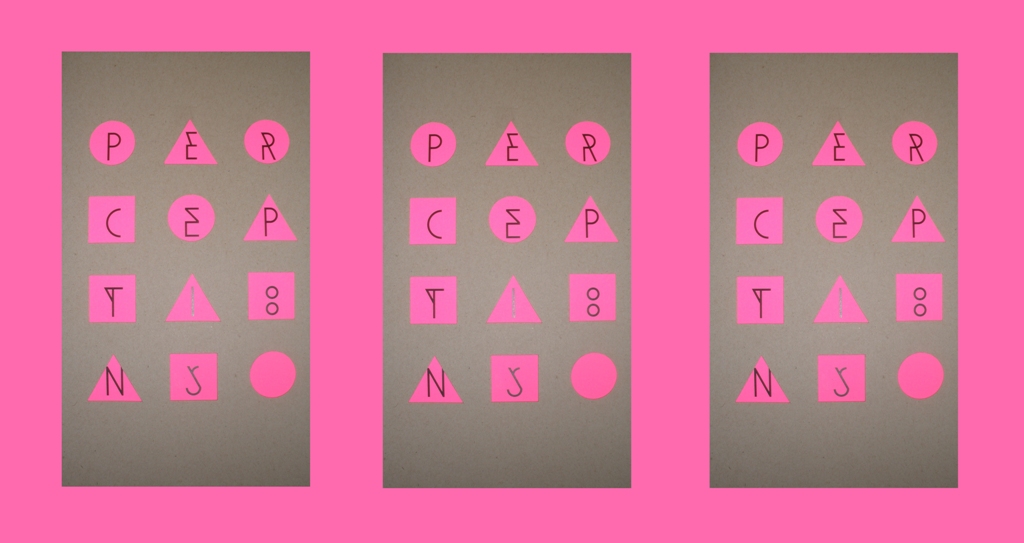
“Nineteenth and Valencia” is a rumination in a hip café about becoming an utter loser.  It’s a funny piece, I adore it, and you should read it.  More importantly, the magazine, “Perceptions,” is worthy of purchase regardless of my presence.  Not only was my story featured alongside the work of some genuinely talented authors and artists, the book itself is an art piece – hands down the most beautiful periodical that I’ve been printed in.  Issues are $15 a copy. The story was published in the 2012 issue. Query Jonathan Morrow at jonathan.morrow@mhcc.edu for more information.

Mt. Hood Community College

Humanities Division c\o Megan Jones

26000 SE Stark St, Gresham, OR 97080.

Ask for the 2011-2012 issue.

Perceptions: A Magazine of the Arts has appeared annually since 1969. The magazine is produced by students who register for WR247, The Literary Publication, a three term class.

In the fall, students solicit submissions from the campus community and the outside community. After submissions are received, students read and choose which works would best reflect their chosen vision of the magazine. Working with a student from the graphic design program and the printing technology program, the design, paper and over-all look of the magazine is decided. The students continue to work as a team for the next two terms. During the winter term students work with the printing technology class who take the graphic designer’s plans and implement them. The contributors are contacted and invited to read their works at a reception that the students plan for early spring term. Awards are given for the best poem, best prose and best artwork, and the students choose these award winning works.

Although the staff is small, Perceptions reaches other programs on campus, involving other students not inclined to literature and the arts, to be exposed and participate in literary publication. The graphic design student is given first hand experience in working as part of a team to produce a design for the magazine. Printing technology has always used Perceptions as a project as part of the second year of the program.

Perceptions - Collage copy - resized

Leave a comment

Filed under Home, Literature, Memoir, Short Story