Tag Archives: literature

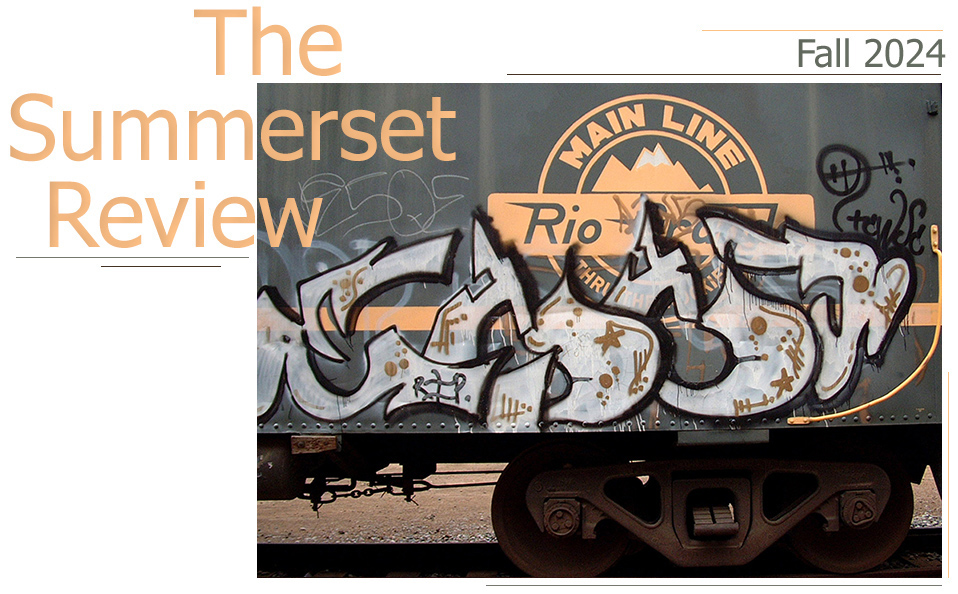
The Summerset Review – “Souvenirs”

I’ve only recently resumed submitting stories for publication, and I am as proud as can be that my short story, “Souvenirs,” has been published in the Fall 2024 Issue of The Summerset Review. The story is about a cab ride not dissimilar to one I took nearly a decade ago, and I was struck by the story the cab driver told me. I spent years considering how I might tell the story, and this was what I came up with.

From the Summerset Review homepage:

The Summerset Review is a literary journal released quarterly on the 15th of March, June, September, and December on the Internet, and periodically in print form. Founded in 2002, the journal is exclusively devoted to the review and publication of unsolicited fiction, nonfiction, and poetry.

Staff Bios

Joseph Levens has had fiction and nonfiction appear in The Gettysburg Review, Florida Review (Editors’ Award for Fiction), New Orleans Review, AGNI, Sou’wester, Meridian, Other Voices, The Literary Review, Zone 3, The Good Men Project, and many other places. He lives on Long Island and currently teaches Creative Writing at Stony Brook University. www.josephlevens.com

Erin Murphy is the author or editor of eleven books, including Human Resources (forthcoming from Salmon Poetry of Ireland) and Assisted Living (Brick Road Poetry Prize, 2018), a collection of demi-sonnets, a form she devised. Her most recent co-edited anthology, Bodies of Truth: Personal Narratives on Illness, Disability, and Medicine (University of Nebraska Press, 2019), won the Foreword INDIES Gold Medal Book of the Year Award. Her awards include the Dorothy Sargent Rosenberg Poetry Prize, the Foley Poetry Award, the National Writers’ Union Poetry Award judged by Donald Hall, a Best of the Net award judged by Patricia Smith, and The Normal School Poetry Prize judged by Nick Flynn. She is Professor of English and Creative Writing at Penn State Altoona. www.erin-murphy.com

History of the Journal

The Summerset Review started as an online literary quarterly in 2002, publishing exclusively fiction and nonfiction. With a staff of three volunteers, the magazine faithfully produced its issues on time, reviewing unsolicited submissions year-round, the great majority of which were made electronically and sent through email from hopeful writers ranging from high school students to authors with many published books to their names.

Since 2002, the journal has taken on poetry, book reviews and art essays on occasion, and produced a few print issues collecting a sampling of work that previously appeared online. Remaining ad-free and accessible at zero cost to readers, the publication has released all quarterly issues on time over its twenty-year history. Editorial staff members are proud to say that they respond to all submissions within four months, do not solicit authors, and do not navigate a slush pile.

The Summerset Review has read at The New York Public Library, national conferences, colleges, and other places, including events sponsored by the Council of Literary Magazines and Presses (CLMP), the New York State Council on the Arts (NYSCA), the National Endowment for the Arts (NEA), the National Council of Teachers of English (NCTE), and the Association of Literary Scholars and Critics (ALSC). Print issues of the magazine are frequently donated to book fairs across the country, with all proceeds going to charitable causes in the respective areas.

Work originally published in The Summerset Review has been reprinted in the Pushcart Prize, the Best American series, the PEN America Award series, the Best of the Net anthology, notable collections such as the Iowa Short Fiction Award, and a great many books published by our contributors.

Mission Statement

We think of ourselves as simply people who like to read good contemporary literature, who want to share the best of our experiences with others. The highest form of retribution for our efforts is a lasting impact on a few sensitive readers of our journal—people we don’t know, people we will never meet. We received an email from a reader once, who said a story in our current issue (at the time) changed her life. Assuming this change was for the better, what more could we ask for?

Leave a comment

Filed under Literature, Memoir, Short Story

‎September ‎29, ‎2021 – Meditation on Joseph Campbell’s Essays

I’ve been reading Joseph Campbell’s writing on myth and on ritual. He has a specific view of the role of religion, myth, and ritual in the lives and beliefs of contemporary civilization, and points to science as the source of a contemporary crisis, in that science has dispelled literalist interpretations of biblical legend (and other religious narrative):

“And in this there is serious danger. For not only has it always been the way of multitudes to interpret their own symbols literally, but such literally read symbolic forms have always been – and still are, in fact – the supports of their civilizations, the supports of their moral orders, their cohesion, vitality, and creative powers. With the loss of them there follows uncertainty, and with uncertainty, disequilibrium, since life, as both Nietzsche and Ibsen knew, requires life-supporting illusions; and where these have been dispelled, there is nothing secure to hold on to, no moral law, nothing firm.”

I can see that crisis as it plays out in the US (and perhaps all Judeo-Christian traditions). Literalism tends to coincide with fundamentalism, because to continue to understand the Bible, and biblical texts, in a literalist sense, one must diverge from a fact-based, “scientific” understanding of humanity and of history all the more rigorously. This not only polarizes humanity, but it further activates the isolationist notions of supremacy that are born of literalist understandings of religious texts: “Now the peoples of all the great civilizations everywhere have been prone to interpret their own symbolic figures literally, and so to regard themselves as favored in a special way, in direct contact with the absolute.”

Furthermore, Campbell sees a crisis in those who lack faith. He possesses a more traditional view of society and culture, and saw the counterculture springing up around him during the sixties as an example of the loss of foundational belief systems. He was also critical of the new age (my term) tendency to adopt piecemeal bits of eastern religions and philosophies divorced from their cultural context:

“With our old mythologically founded taboos unsettled by our own modern sciences, there is everywhere in the civilized world a rapidly rising incidence of vice and crime, mental disorders, suicides and dope addictions, shattered homes, impudent children, violence, murder, and despair.”

Though I’m not certain if these ailments of mankind didn’t exist with equally alarming regularity before the contemporary moment, and though I don’t qualify each of them as a societal loss, I do generally agree with Campbell that today’s secular world is marked by a sense of despair and helplessness. I also agree that this helplessness is in part rooted in the loss of faith-based belief systems that have traditionally provided a recipe and justification for decency and kindness (at least within one’s own community). They have also provided a meaning or a justification for such behaviors, in that human decency and just participation within a given social order may be rewarded in a religious sense. This reward or promise, in its basest form, is a pleasurable existence in some heavenly afterlife. In more heady interpretations of religion, redemption comes in the form of transcendence.

So that is the current predicament: between “the cries of preachers for repentance, conversion, and return to the old religion,” and their challenges to “the modern educator with respect to his own faith and ultimate loyalty,” and, on the other hand, the perceived nihilism of the secular world, themselves suffering from the loss of guiding principles.

And this is where, at least in Campbell’s earlier lectures, he loses focus on the potentiality for a new guiding myth. He limply suggests that it may be found in psychology, with its exploration of the unknown that resides within each of us. If psychology were to investigate the history of myth and ritual, identify the causes and sources of human faith in these systems, and relate that to unconscious needs or desires, then perhaps we could reconstitute a mythos of the individual, a mythos that accommodates personal identity (essential, as it turns out, for better or for worse, in Western traditions).

The primary mistake that I see in this reasoning, and this is not to discount Campbell, because his lectures are masterpieces, and I can see the foundation for much of the contemporary understanding of culture and religion embedded in his philosophies. But I don’t believe that he was able enough to identify the mythological systems already functioning in western society, beliefs and rituals that, while they may not have liturgical foundation, are taken as guiding principles, and are also products of our contemporary moment. I also think that this is a result of a common assumption that we make about science, which is that it exists outside of ideology or ideological determinations – that it is objective.

On the other hand, Campbell sees myths as inherently subjective, reflective of the contexts in which they are believed and practiced. He theorized that the foundational function of myth was to explain the unknown, and, in particular, to make sense of death. Furthermore, there was necessity for individuals to participate within a society, which subsequently required shared rules and beliefs. And finally, at a broader level, the natural context, the environment itself, provided the symbolic material for myth. An example that he uses often is ritual sacrifice within primitive farming communities. A specifically agricultural understanding off the cyclically of birth, life, death, and rebirth led these societies to enact ritual sacrifice in something like emulation of these natural processes.

So the formation of myth and ritual are narrative traditions used to explain natural phenomena and to understand humankind’s role within the natural universe. Yet, the arrival of science appears, at first glance, to be in conflict with these traditions. Campbell believes that: “as a result of the continuing open-hearted and open-minded quest of a few brave men for the bounds of boundless truth, there has been a self-consistent continuity of productive growth.” So, early on at least, Campbell believes that scientific investigation has led to a new and essential understanding of the world, but one that diverged from mythological narrative historically believed to be true.

The old texts comfort us with horizons. They tell us that a loving, kind, and just father is out there, looking down upon us, ready to receive us, and ever with our own dear lives on his mind. According to our sciences, on the other hand nobody knows what is out there, or if there is any “out there” at all. All that can be said is that there appears to be a prodigious display of phenomena, which our senses and their instruments translate to our minds according to the nature of our minds.

It seems that myths and religious narratives, especially in a literalist tradition, are believed to be true by the faithful – to the exclusion of all contradictory thought. And that, with the advent of a revolutionized understanding of the world, with advanced instruments of measurement and observation, the ground or base of understanding is more “sophisticated” or at least different from, say, primitive agricultural societies. Thus, we have a newer context in which our own mythologies are generated.

This being the case, and according to Campbell’s logic, if one believes that there might be a contemporary belief system or matrix of narratives that constitute our current mythology, it would have to be born of this new context which has proved older understandings of the world obsolete. All faith-based belief systems, and particularly those which practice literalist interpretations of liturgy, believe in the truth of that which they are faithful to. And in certain ways, absolute belief makes it impossible for the believer to interrogate their own system. We become blind to the faults of those things we accept as fact. Campbell writes: “For the really great and essential fact about the scientific revelation – the most wonderful and most challenging fact – is that science does not and cannot pretend to be “true” in any absolute sense.” Contemporary secularism has created a sort of dichotomy between science and religion, but, despite Campbell’s more nuanced understanding of science, we have come to take “science” as synonymous with fact.

Before proposing that psychology, and psychological understandings of myth, might be a means to salvaging our dying mythos, Campbell writes:

“In moral disequilibrium, we must now ask whether it is not possible to arrive scientifically at such an understanding of the life-supporting nature of myths that, in criticizing their archaic features, we do not misrepresent and disqualify their necessity – throwing out, so to say, the baby (whole generations of babies) with the bath water.”

And what I would argue is that we are still living in a time of ritual and mythology. Those living within the myth are unable to see it as such. It is naturalized in society as “the way” rather than an object of study, and for that reason, we cannot exactly turn to the old myths for guidance. They are already perceived as such, despite that many elements of those myths and rituals are still evident in current practices (dates of the resurrection coinciding with harvests and such).

That said, perhaps we are still living under the sway of a new narrative, something that provides meaning and guidance, is a reflection of our contemporary society and our physical surroundings, and is taken to explain the world in such a way that accounts for available and observable phenomenon.

Campbell describes something like this reflection of contemporary society as explained through mythology, though he focuses in this case on the pervasive effect of Judeo-Christian religion in the Occident. Campbell, in critiquing the new age fad of sampling, piecemeal, bits of eastern religion in order to establish some form of meaning, says that a western emphasis on the individual, a consequence of religious traditions, precludes us from adopting eastern philosophies. He argues that an emphasis on individuality has prompted humans to do great things, but he also sees the limitations of the ideal, and through recourse to eastern religions illustrates that our certainty in the value of individuality is simply a matter of cultural tradition.

Leave a comment

Filed under Blog Posts, Home, Literature, Memoir

August 23, 2021 – Meditations on the Buck that Visited Us Each Night

Written as a part of an email home while working on a tugboat in the Arctic Circle of Northern Alaska.

We had an adolescent buck that would visit our backyard each night, and we’d taken to feeding the animal. There were other animals that came though as well – skunks and cats and possums and squirrels and birds – so there were a million noises outside the open bedroom window, and each had to be investigated. But we were waiting for the buck. Each of the other animals was of interest, but the buck was the spectacle.

When he arrived, I cut up apples for him in the yard while he watched me, and left them in one of our barren planters. He was a handsome animal, with a perfectly black nose and muzzle. He watched me with his large black eyes while I prepared his food and I imagined I saw something like sadness there: not out of concern for me – my presence or absence – but because he was no longer a master of the wild there. He was a refugee, creeping through the night.

I was amazed that the old neighbors didn’t like the bucks. If one were able to say that the animals ruined the gardening, or were dangerous, or that there was anything threatening about them at all, then I would have accepted it. But they just didn’t like critters. In contrast, the deer were one of my favorite things – majestic and kind of mysterious. They reminded me Joseph Campbell’s writing. Campbell described a prehistoric time, kind of an origin of myth, before humankind took for granted that they were the ruling species on the planet: 

“In those earliest millenniums… men dwelt and moved about in little groups as a minority on this earth. Today we are the great majority, and the enemies that we face are of our own species. Then, on the other hand, the great majority were the beasts, who, furthermore, were the “old-timers” on earth, fixed and certain in their ways, at home here, and many of them extremely dangerous.”

It’s sad, I think, but the bucks are a vestige of that time. They’re kind of vagabonds, in hiding. They’re furtive, not owners of the world that was once theirs entirely, theirs to exist in utter deer-ness. But now they stalked through the night, strangers in an inhospitable world. Perhaps (I hope) our yard provides a tiny little haven for creatures beleaguered by humankind.

Leave a comment

December 14, 2023 · 12:20 pm

Flash: Tattoo For Conrad

“Flash: Tattoo For Conrad” is a single block printed on navigational training charts. The image is a variation on a design I’ve drawn and toyed with over the years. Here it’s conceived as a piece of flash, or tattoo art that hangs on studio walls to advertise the artist’s skill and inspiration for the customer.

Flash has come to be considered an artform of its own over the years. Here, I’m commemorating one of my favorite authors, Joseph Conrad, and the transformative value of literature.

$25
To purchase, contact me via instagram DM @joshbarlas or email joshbarlas@gmail.com

Leave a comment

Filed under Linoprint, Print Making

Emrys – “Aluxes”

Read the story here.

I was submitting to Emrys for years when they accepted my story, “Aluxes,” to appear in Volume 33. Unfortunately, the publication is currently on indefinite hiatus. They had thrived for nearly 40 years before shuttering.

In the words of Wikipedia, “Alux is the name given to a type of sprite or spirit in the mythological tradition of certain Maya peoples from the Yucatán Peninsula and Guatemala. Tradition holds that aluxo’ob are invisible but able to assume physical form for purposes of communicating with and frightening humans as well as to congregate. They are generally associated with natural features such as forests, caves, stones, and fields but can also be enticed to move somewhere through offerings.” That said, this story has nothing to do with aluxo’ob, aluxes, or any other mythological figure. It’s about two friends who elicit local help to locate a cave in a rural region of the Yucatan Peninsula.

Emerys Mission Statement:

Founded in 1983, Emrys (a Welsh word meaning “Child of Light”) has sponsored music competitions, concerts, art exhibitions, conferences, creative writing awards, poetry workshops, and lectures. The Emrys Journal, our group’s signature literary publication, has appeared annually since 1984. Emrys Press, launched in 1995, primarily publishes poets of outstanding merit. Our Reading Room has brought writers and audiences together since 1990. Our Writing Room has provided professional instruction for writers at all stages of their craft since 2006 and begun in 2011, our Open Mic, which has provided a venue for writers of all skill levels to present their work to an enthusiastic and supportive audience.

Based in Upstate South Carolina, the Emrys Foundation was awarded the Elizabeth O’Neill Verner Governor’s Award for the Arts in 2004 in recognition of outstanding contributions to the arts in South Carolina.

➢ Emrys nurtures creativity among emerging and established writers.
➢ Emrys seeks to expand the impact of the literary arts.
➢ Emrys collaborates across a broad variety of art forms to give voice to the written word.

We invite you to join our award-winning organization.

Emerys History:

On the night of April 2, 1981, a special musical performance took place at Furman University. Everyone involved had ties to Greenville: the librettist, Keller Cushing Freeman, the musical composer, Sally Wyche Coenen, and the singers. The event was the premiere performance of an original song cycle called The Death of Arthur: a Requiem for Six Voices. The singers represented important characters in the life of the legendary king of the Round Table.

The Death of Arthur was the first public appearance of Emrys, but it had its real beginning when two friends dreamed, planned, and worked to make some ambitious ideas come to fruition. Who better to tell about this than one of the co-founders, Keller Cushing Freeman:

“It wasn’t quite the first act of Puccini’s La Boheme, where a cluster of young artists and poets shared their dreams and a bottle of vin ordinaire in a Paris garret. But it was close. Our setting was a basement apartment on Constitution Avenue in Washington, D.C.  Serving up the cabernet was Dan Coenen, a law clerk for U.S. Supreme Court Justice Blackmun. Tossing the salad was Dan’s wife, Sally Wyche Coenen, a native of Greenville, S.C., currently taking photography courses and continuing her study of piano with Spencer Fellows. Sally also harbored ambitions as a composer, although 1980 was not a year when the world clamored for the music of emerging young composers—male or female. To date Sally had not had even the nibble of a commission.

“I was the fortunate dinner guest that icy winter evening, warmed by more than 20 years of friendship with Sally and the Wyche family. Like Sally, I, too, had a closet stuffed with dreams. Although teaching philosophy was my day job, I wrote poetry on the sly. Recently I’d completed a series of poems based on the legends of King Arthur. The material seemed made for music, so I labeled the poems lyrics and set off to find a composer to collaborate on a song cycle. Sally was my first choice.

“That evening over melting bowls of ice cream we reflected on the obstacles confronting writers, composers, and artists who were in sore need of a place to present their work, an audience to receive the work, and a patron to subsidize the projects. Without realizing it, we had begun to articulate the mission statement for the organization that was to become The Emrys Foundation—to promote excellence in the arts, especially literary, artistic, and musical works of women and minorities.

“Nearly a year later we felt ready to present our first collaboration, a song cycle for piano (later scored for chamber orchestra), narrator and six voices.

“To choose a name for our new partnership we turned to Welsh lore that had inspired our first collaboration. Learning that King Arthur’s sorcerer, Merlin, was actually named Emrys, we agreed that this rather mysterious word had a special ring to it. When we discovered that Emrys was translated Child of Light, we felt certain that this was a name of good omen.”

Leave a comment

Filed under Literature, Memoir, Short Story

Sein und Werden – “Centrifugal Momentum and the Points to which We’re Affixed”

Read the story here.

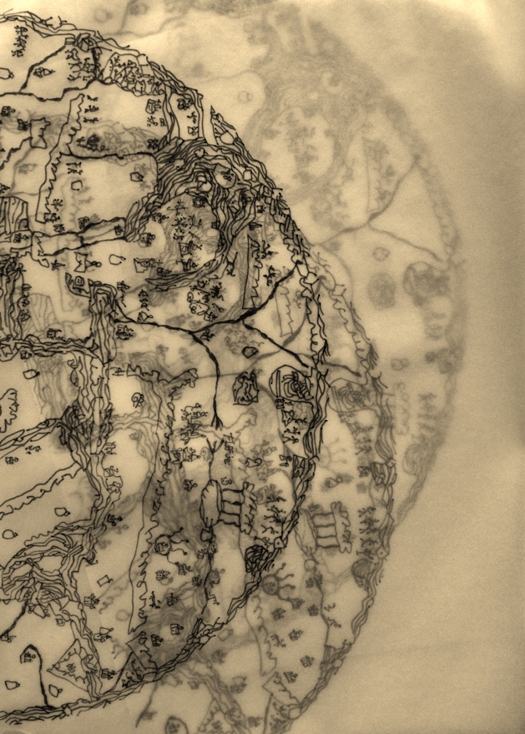
“Centrifugal Momentum and the Points to which We’re Affixed” was published in  Sein und Werden’s “Mappa Mundi” issue. Their editor, Rachel Kendall, publishes consistently interesting and intelligent work, and I’m thrilled to have her stamp of approval.

“Centrifugal Momentum and the Points to which We’re Affixed” is a story primarily about a woman who’s driven to live her life according to a set of personal guidelines that differ from societal proscriptions, and who thereby refuses the material trappings that bind most of us. It’s also kind of a love story? Or there’s a kind of love in it. And there’s a man.

SEIN UND WERDEN, THE MANIFESTO:

‘Sein und Werden’ is a quarterly online (and occasional print) journal of arts and letters. The title comes from the Expressionist concept of Sein und Werden – ‘being and becoming’, the notion that we are born as nothing and only through experience do we become who we are (an idea shared with Sartre in his work ‘Being and Nothingness’). Using certain techniques of cinematography to create lengthened shadows, twisted stairways and a distorted mise-en-scène, the Expressionists were able to depict a nightmare world that would later influence a number of other cinematic developments, such as film noir, aswell as leading artistic movements. One such group who owed much of their technique to Expressionism were the Surrealists, who played with these concepts to create bizarre images of the subconscious, making use of dreams and automatic writing. The goal of ‘Sein und Werden’ is to present works that evoke the spirit of the Expressionist, Existentialist and Surrealist movements within a modern context, which I like to call ‘Werdenism’.

The aims of Sein und Werden are to:

– Publish a quarterly collection of multidisciplinary work that incorporates elements of Expressionism, Existentialism and Surrealism, both online and in print.

– Accept submissions that broaden and emphasize the ideas behind Werdenism. As it stands there are a core group of artists whose work I feel embodies the concept of “Werdenism”. However, we are always looking for new blood and we are always open to submissions of new work as long as it exhibits the Werdenist gestalt. All work accepted shall remain copyright of the author/artist.

– Provide a theme for each issue (suggestions for future themes are encouraged). Submissions will not be restricted by the theme, although themed pieces will take preference and any other material may be held for use in a future issue, with the artist’s permission.


Original concept, layout and design by Rachel Kendall

All content is the respective authors and published here with their consent.

Leave a comment

Filed under Literature, Short Story

Santa Clara Review – “My House of Cards”

Read the story here.

“My House of Cards.”  It is about terrible roommates – including the narrator – and it was published in the Spring 2012 issue of  The Santa Clara Review . an accomplishment that I’m proud of.  Having spent most of my life in Northern California, and having lived for a couple of years in San Jose, Santa Clara Review felt like a home coming.  The publication is professional looking, their layout is great, the featured artwork is beautiful, and I’m published beside a number of talented authors and poets.

For the online version of the magazine, click here.

For the free eReader download, click here.

For the free iPad edition, click here.

You can also order yourself a physical copy of this magazine – just get in touch with the editors.  Back issues are $7.50.  Ask for Spring 2012.

Mail:
Santa Clara Review
500 El Camino Real, Box 3212
Santa Clara, CA 95053

Phone:
(408) 554 – 4484

Email:
santaclarareview@gmail.com

Santa Clara Review:

Santa Clara Review is a student-edited literary magazine which publishes poetry, fiction, non-fiction, visual art, and music. The magazine is published biannually in February and May, drawing on submissions from Santa Clara University students, faculty, and staff, as well as from writers around the nation and globe. The Review is entirely student run by undergraduate students who are actively enrolled. The Review promotes the literary arts in several spheres: the student and alumni writing community within Santa Clara University, the academic literary community, and the national community of writers outside of SCU.

The Review is committed to the development of student literary talent, both in editorial and creative writing skills. The Review provides Santa Clara students an opportunity to gain knowledge in the practice of contemporary writing and criticism, and creates a forum for faculty, students, and alumni to express their creative energy.

History and Vision:

Founded in 1869, Santa Clara Review–formerly known as The Owl and The Redwood–is one of the oldest literary publications in the Western U.S. Throughout its duration the publication has represented Santa Clara University’s commitment to the humanities, a tenant of Jesuit education. Because the Review shares in Santa Clara University’s commitment to the humanities, the Review will accept only the highest quality material for publication, material which echoes Santa Clara University’s dedication to the pursuit of truth, honesty, and social responsibility within the literary arts.

Leave a comment

Filed under Home, Literature, Short Story

Perceptions – “Nineteenth and Valencia”

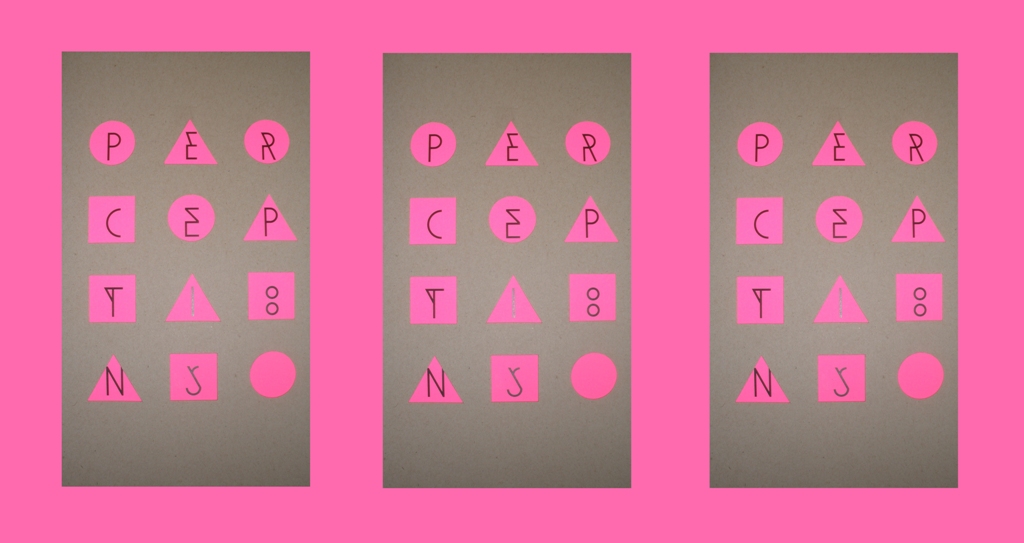
“Nineteenth and Valencia” is a rumination in a hip café about becoming an utter loser.  It’s a funny piece, I adore it, and you should read it.  More importantly, the magazine, “Perceptions,” is worthy of purchase regardless of my presence.  Not only was my story featured alongside the work of some genuinely talented authors and artists, the book itself is an art piece – hands down the most beautiful periodical that I’ve been printed in.  Issues are $15 a copy. The story was published in the 2012 issue. Query Jonathan Morrow at jonathan.morrow@mhcc.edu for more information.

Mt. Hood Community College

Humanities Division c\o Megan Jones

26000 SE Stark St, Gresham, OR 97080.

Ask for the 2011-2012 issue.

Perceptions: A Magazine of the Arts has appeared annually since 1969. The magazine is produced by students who register for WR247, The Literary Publication, a three term class.

In the fall, students solicit submissions from the campus community and the outside community. After submissions are received, students read and choose which works would best reflect their chosen vision of the magazine. Working with a student from the graphic design program and the printing technology program, the design, paper and over-all look of the magazine is decided. The students continue to work as a team for the next two terms. During the winter term students work with the printing technology class who take the graphic designer’s plans and implement them. The contributors are contacted and invited to read their works at a reception that the students plan for early spring term. Awards are given for the best poem, best prose and best artwork, and the students choose these award winning works.

Although the staff is small, Perceptions reaches other programs on campus, involving other students not inclined to literature and the arts, to be exposed and participate in literary publication. The graphic design student is given first hand experience in working as part of a team to produce a design for the magazine. Printing technology has always used Perceptions as a project as part of the second year of the program.

Perceptions - Collage copy - resized

Leave a comment

Filed under Home, Literature, Memoir, Short Story

Spilling Ink Review – “The Last Dignified Transaction”

Spilling Ink Review is defunct, but read the story here.

“The Last Dignified Transaction” is about the rewards inherent in being a university teaching assistant, and then going on to work as a waiter… and then having to serve your former students.

This publication originated in Glasgow. Spilling Ink Review was a quarterly e-journal: “They’re a troupe of professional writers and readers that shares a passion for the written word as well as compassion for new and established writers looking for an innovative platform. Their aim is to create an environment where the unexpected can thrive, where the serious and the humorous can sit comfortably side-by-side, and where we can celebrate both the process and the product of creative writing.”

Spilling Ink Review is now defunct.  

Leave a comment

Filed under Home, Literature, Memoir, Short Story

Black Market Review – “The Staging Ground”

Black Market Review is Defunct, but read the story here.

Black Market Review - Collage copyBlack Market Review - Collage copy

“The Staging Ground” was published in Black Market Review, which was published out of Edge Hill University. the story is about bad neighbors (perhaps including the solipsistic narrator) and a feud that place in or around the laundry room.

The Black Market Review was edited exclusively by Creative Writing undergraduate and postgraduate students at Edge Hill University.  Thank you for the opportunity BMR.

Black Market Review operated out of Edge Hill University. 

Leave a comment

Filed under Home, Literature, Short Story